
The Unbearable Flatness of Modern Design
"Little boxes, on the hillside
Little boxes made of ticky-tacky
Little boxes, little boxes
Little boxes, all the same"
— "Little Boxes" by Pete Seeger - YouTube
The Unbearable Flatness of Modern Design
Across our city - and beyond - there has been a rapid and highly visible rise in the popularity of “modern houses.” They appear on nearly every available lot, often marketed as clean, minimalist, and forward-thinking. Yet while these buildings adopt the surface language of modernism, many fall short in ways that reveal a deeper and more troubling pattern within contemporary architectural practice and construction culture.
What initially presents as simplicity frequently conceals a lack of rigor. These structures tend to stand out not for innovation or clarity of thought, but as a collection of recurring details and deficiencies that point to a broader erosion of craft, detailing, and long-term thinking. They have become stage set pieces in the theater that is the city.
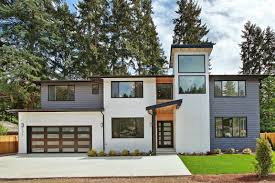
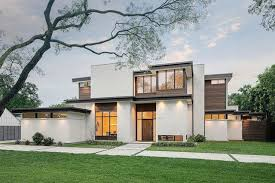
A Litany of Flaws in Execution At the heart of this proliferation is the fact that while originally it was a design philosophy, it has been dissected into a series of common details adopted by builders. It is now degraded to a superficial style driven solely by profit. The emphasis of cost over quality leads to shoddily executed structures that look good for about 6 months. Speed and cost efficiency routinely eclipse durability, restraint, and care, leading to buildings that begin to fail far earlier than they should.
Water management, one of the most fundamental responsibilities of architecture, is often mishandled. Flashing—meant to direct water away from vulnerable assemblies—is frequently installed without proper slope or continuity, allowing moisture to pool, penetrate, and quietly degrade the building envelope. Slowly rotting the structure from the inside out.
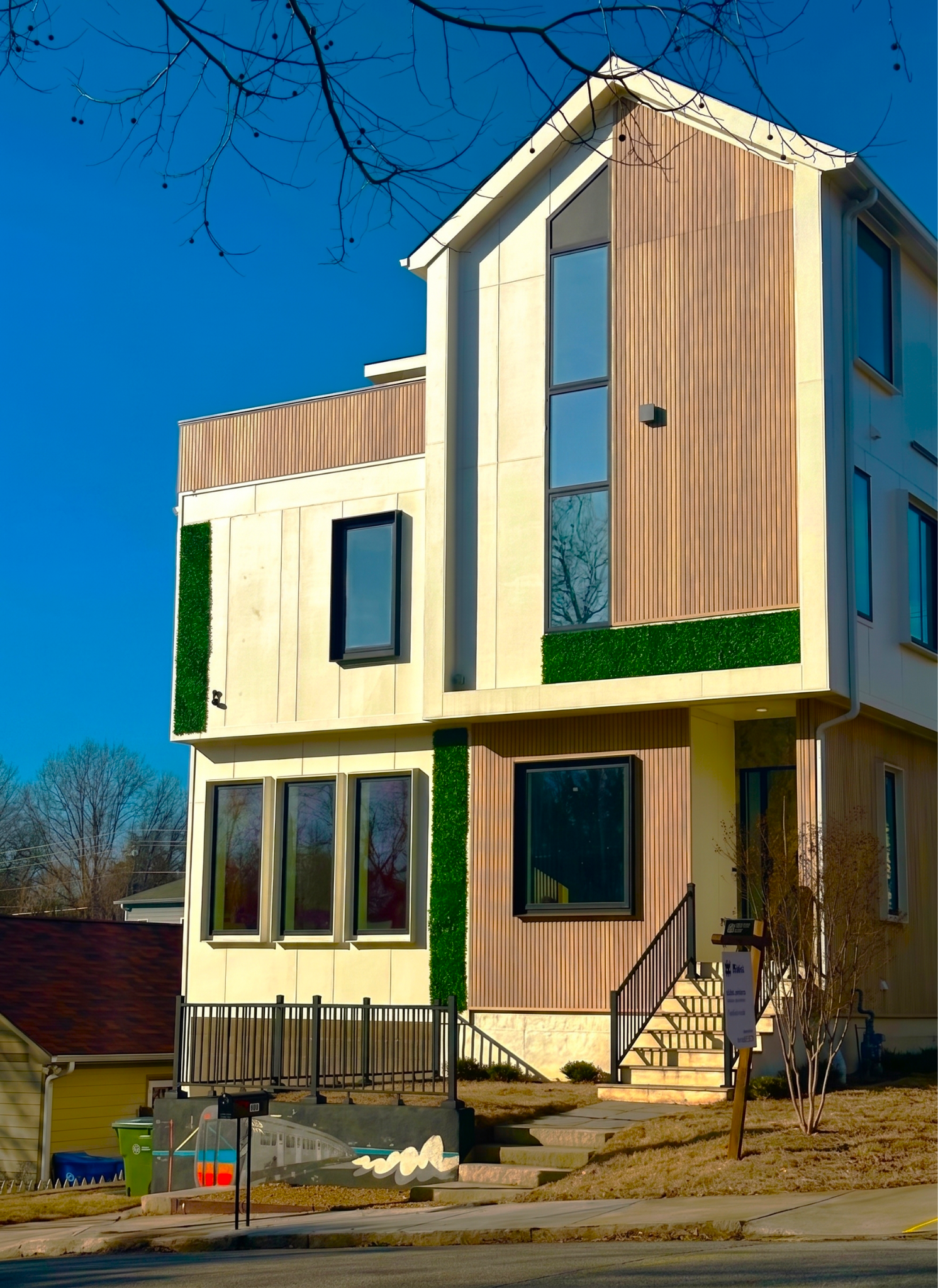
Thin, single-coat paint spray applications chalk, fade, and peel within a year, undermining both protection and appearance. Materials are also routinely misapplied, without regard for climate or long-term exposure. In the southern sun, stained wood siding and trim fail quickly as protective coatings break down under the ultraviolet rays of the sun. Bright and dark colors fade aggressively. In one nearby example, synthetic turf has even been applied as a decorative façade element. This is an aesthetic gesture entirely disconnected from material logic or longevity.
These houses tend to rely on the same narrow range of materials and tones: stark whites, cool greys, and a single synthetic wood accent. The result is a streetscape stripped of rhythm and variation, creating an environment that feels repetitive, flattened, and devoid of personality.
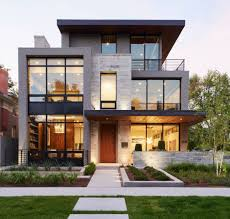
Large expanses of frameless glass are often prioritized over livability. While intended to convey openness, they frequently produce the opposite effect, forcing occupants to cover windows for privacy and comfort. The architectural gesture defeats itself, leaving behind an awkward tension between appearance and use.
Perhaps their most troubling aspect of these modern homes is their anonymity. These buildings exhibit little relationship to climate, regional history, or local building traditions. They could just as easily exist in a desert, a mountain town, or a dense urban core. In attempting to be universal, they become placeless. They do not enhance or contribute to a sense of place.
The Public Craving for Texture and Richness
After years of near-total dominance by white, grey, and black (a simplified and often misunderstood interpretation of high modernism) we are seeing a clear cultural response. Color, pattern, and visual complexity are returning with force.
In many interiors, this desire manifests as compensation. Overscaled and dramatic wallpapers are applied to fill the void left by the absence of architectural detail - no moldings, no cornices, no wainscoting. These gestures signal a longing for depth, tactility, and engagement. Flatness, it turns out, is deeply unsatisfying.
This longing is not new. Movements such as Art Nouveau embraced fluidity, organic ornament, and the expressive potential of structure itself, while the Craftsman tradition emphasized honesty of materials, visible joinery, and the dignity of handwork. Both movements understood that buildings should engage the senses, not merely recede into abstraction.
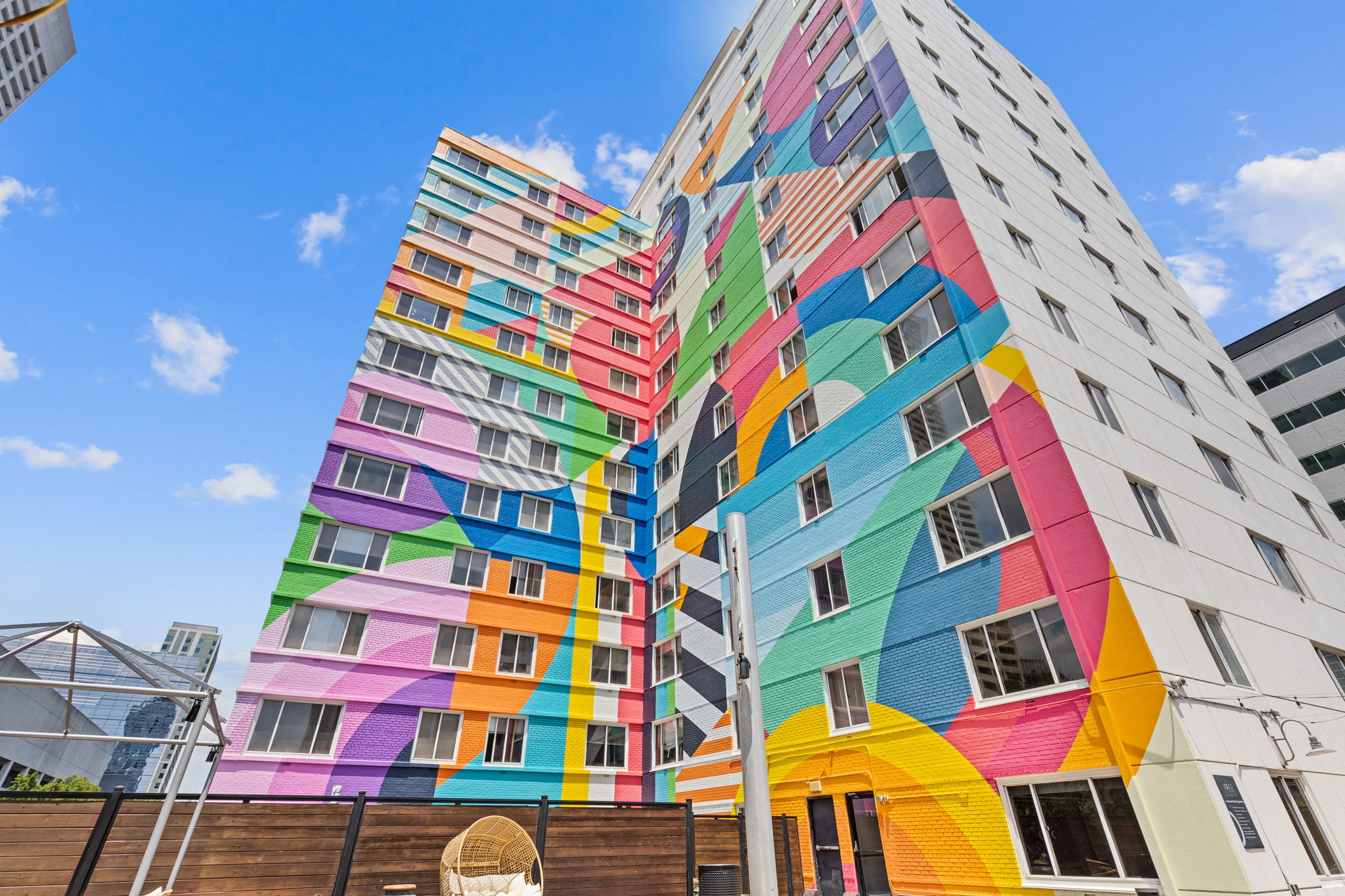
This craving extends to the urban scale as well. Tall, monolithic buildings increasingly rely on murals to animate vast, unarticulated walls. While visually energetic, these interventions are often conceived without regard for longevity or material appropriateness, raising questions about maintenance and endurance rather than offering true architectural resolution.
The Lost Art and Craft of Detail
There was a time when even the most utilitarian components of a building received thoughtful attention.
· Downspouts were shaped and flared, not merely attached.
· Drainage grates were patterned ironwork.
· Mailboxes were solid, embossed objects that expressed pride and permanence.
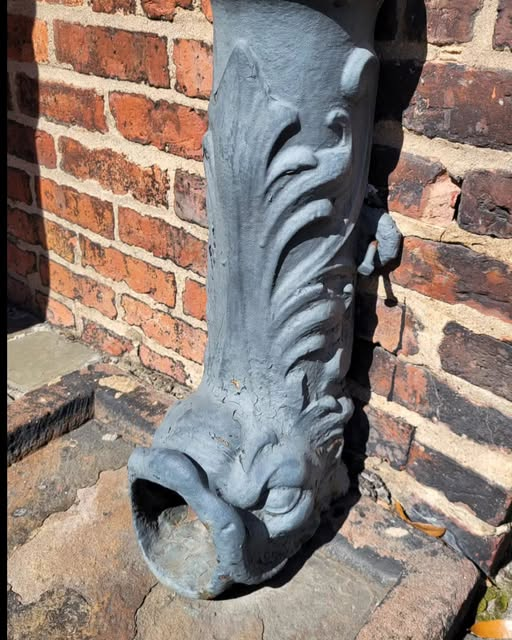
The Craftsman movement, in particular, treated these elements as opportunities for expression rather than inconveniences to be minimized. Art Nouveau similarly elevated everyday components - railings, brackets, hinges - into moments of design.
Today, flatness dominates - an aesthetic aligned with industrial assembly, interchangeable parts, and minimal accountability.
Architecture as Mass-Produced Commodity
Residential buildings increasingly resemble flat-pack kits. The distinction between a house, a bank branch, and a small office building has eroded. The same formula repeats:
Flat roofs that struggle with drainage and demand constant maintenance.
Flat walls that reject shadow, depth, and movement.
Flat metal details applied as surface decoration rather than integrated design.
This is the machine age asserting itself - not through intelligence or refinement, but through repetition. What is missing is the kind of subtle movement, layered depth, and material honesty found in earlier traditions. Architecture should respond to climate, material reality, and place, not trend cycles or developer pro formas.
The consequences extend beyond aesthetics. They show up in untrained or under-directed trades: doors out of plumb, poorly joined moldings, improperly installed windows, water infiltration, even misaligned outlets and switches. Small details reveal large systemic problems.
The Test of Time
The most enduring and beloved buildings share common traits.
- They respond intelligently to climate.
- They are detailed to weather not just the elements
- They are detailed for permanence
- They use materials appropriate to their region.
- They are adaptable - capable of evolving with their occupants over generations.
These qualities are not nostalgic, they are practical. They reflect an understanding that architecture is a long-term cultural investment, not a disposable commodity.
At Ross Design, we strive to produce construction documents that clearly communicate these priorities. When expectations are established early and articulated precisely, contractors and tradespeople consistently rise to meet them. Craft does not disappear on its own, it disappears when it is no longer demanded.
Suggested Further Reading & References
- Art Nouveau and Architecture – Smarthistory
https://smarthistory.org/art-nouveau-introduction/ - The American Craftsman Movement – National Park Service
https://www.nps.gov/articles/000/craftsman-style-architecture.htm - The Craftsman Ideal – The Gamble House / Greene & Greene
https://gamblehouse.org/history/ - On Ornament and Meaning in Architecture – Architectural Digest / ArchDaily
https://www.archdaily.com